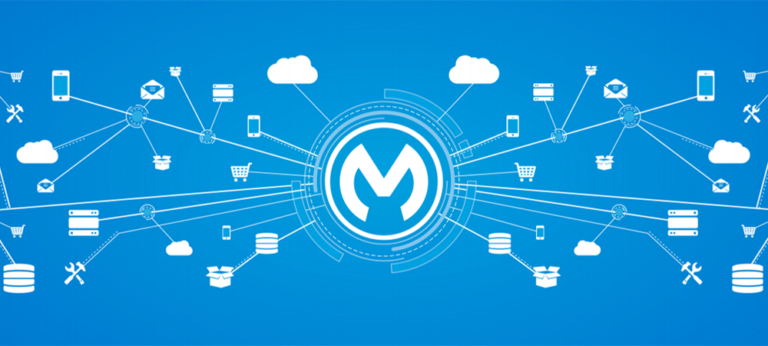
Everything You Need To Know About Enterprise Integration Systems
 By Admin
 Thu, Dec 5, 2019
Updated: Thu, Oct 8, 2026
6 min read
Thu, Dec 5, 2019
Updated: Thu, Oct 8, 2026
6 min read
 mulesoft consulting services

In this article
In the 21st century, many of the technological developments have taken place all around the world, which have brought drastic changes in different sectors or industries. Enterprise data integration systems are such an innovation. These systems have changed the way of working of the giant-sized enterprises and have expanded their range of activities also. These systems are used to integrate the various organizational components, each of which involves different databases and web services.
Enterprise Integration Solutions
The variety of tasks in large enterprises is huge and it leads to the complexity in performing those tasks also. This usually results in fragile and inflexible systems. Moreover, the application of the Legacy software makes things more difficult to manage and it becomes very difficult for the different systems of the organization or enterprise difficult to interconnect. To conduct the work across the company smoothly, enterprise integration is very much essential. Enterprise integration benefits an organization in many ways as it enables better decision-making and boosts the productivity of the organization. With the help of the Mule, you can have a great enterprise data integration strategy as it simplifies the enterprise integration process and allows you to unify all of the services, systems, applications, and databases across your enterprise.
Challenges in Enterprise integration
In large organizations, there is a need for using an efficient integration system for interconnectivity which allows seamless access to the information by those persons and departments who need it the most. There is no logic in collecting and maintaining data in the various systems, and departments of the organization unless you are not able to use it all together so that you can use it for the organization’s benefit. This can be done only with the help of the enterprise integration systems. The data in different systems of the organization is possessed in different formats and protocols and it is only with the help of an efficient organization integration system to integrate such different types of data.
Why enterprise integration is important for the organization?
Enterprise integration is important for an organization to adopt because of the following benefits: –
System interconnectivity: There are different people, processes, systems and technologies working in an organization for performing different types of operations and Enterprise integration systems allow to interconnecting all of them for the smooth functioning of the organizational operations.
Enhanced productivity in the organization: Enterprise integration systems allow the different programs and systems of the organization to communicate with each other so that the organizational productivity can be increased.
Access to the right information when you need it: Integration systems allow the people working in different departments of the organization to access the right information irrespective of the fact that to which system it is related.
Apart from the above-mentioned, there are many other benefits of employing an enterprise integration system. It is always suggested to adopt a high-quality and efficient enterprise integration system such as the Mulesoft Integration Platform.
Frequently Asked Questions
What is an enterprise integration system?
An enterprise integration system is software and architecture that connects an organization’s applications, databases and services so they can share data and trigger each other’s processes. It handles differences in data formats and protocols between systems, so departments can access accurate information without manual re-entry or copying between tools.
Why is enterprise integration important for large organizations?
Enterprise integration matters because large organizations run many systems, often including legacy software, that cannot otherwise share information. Connecting them supports better decision-making, reduces duplicated work and gives each department access to the data it needs, regardless of which system holds it.
What are the main types of enterprise integration?
The main types are data integration, which moves and unifies data across databases; application integration, which links software so processes run across them; API integration, which exposes functions through reusable interfaces; and process integration, which coordinates multi-step business workflows across systems. Most enterprise programs combine several of these.
What is the difference between point-to-point, hub-and-spoke and API-led integration?
Point-to-point connects each pair of systems directly and becomes hard to manage as systems multiply. Hub-and-spoke routes everything through a central broker, which simplifies management but can create a bottleneck. API-led integration, promoted by MuleSoft, layers reusable system, process and experience APIs so connections can be shared and extended.
What is an ESB, and how does it differ from an iPaaS?
An enterprise service bus (ESB) is middleware that routes, transforms and mediates messages between applications, usually deployed and managed by the organization. An iPaaS (integration platform as a service) delivers integration capabilities as a cloud service, so there is less infrastructure to maintain. MuleSoft’s Mule runtime can serve as an ESB and, with CloudHub, as an iPaaS.
What are the biggest challenges in enterprise integration?
Common challenges include legacy systems that are hard to connect, inconsistent data formats and poor data quality, security and access control across many connections, growing complexity, and weak governance over who owns each interface. Planning for these early, rather than after systems are linked, reduces fragile and inflexible integrations.
How do legacy systems affect enterprise integration projects?
Legacy software makes integration harder because it often lacks modern APIs, uses older protocols and stores data in different formats from newer applications. An integration platform can wrap legacy systems with an API layer or connector, so newer applications can use their data without rewriting the original system.
How should an enterprise choose and start an integration strategy?
Start with the business problem, then inventory your systems, data formats and security needs, and choose an approach, such as API-led integration on a platform like MuleSoft, that fits your scale and skills. Begin with one high-value use case before expanding. Pro Integrate supports platform selection across its multi-cloud consulting services.
Does Pro Integrate provide enterprise integration services for businesses in the US, UK and India?
Yes. Pro Integrate is a global IT consulting company with teams serving clients in the US, UK and India, and it offers integration services including MuleSoft consulting. Organizations that want to discuss an enterprise integration project can start through the contact page.